Monday, 16 June 2014

Germany

I'm a little sad to talk about this, because this exchange has been the last one of the 3 we've done and probably i will do.
It all started the day 4 of March, when some german boys and girls came to our school.
We spent an amazing week with them here in Valencia, and the farewell was very sad :(
But afortunately, we would see them again in a few months.
And so, the day 20 of May we took two planes to finally get to Berlin.
And there were they, waiting for us in the airport with a smile on their faces.


The first 5 days we lived with our german family, and I shared family with Paula López.
Our correspondent, Phillip, was very nice with us and we still talk with him very often.
With them we visited many interesting places, because, as you already know, Berlin is a really nice city with a lot of history and where you can learn a lot.
We went to the Berlin Wall, the Brandemburg Gate, Sans Souci Gardens... It all was amazing, but we needed to take like 5 or 6 subways per day to get to everywere, so I can also say this one is the most exhausting exchange I've ever done.


The last 3 days all my class stayed in a hostel next to the Berlin Wall, because this is our last year together and we wanted to spend some days alone.
Those two days we visited a concentration camp (Saschenhausen) and the parliament.


I definitely love Berlin, the culture, the history, the people... If you are looking forward to visit a beautiful place, Berlin is the perfect city.

Bibliography: Visit Valencia
Visit Berlin
Berlin Wall Memorial
Berlin
DPS Guide
Wikipedia
Hostel X Berger

Sunday, 8 June 2014

Easter: my travel to Portugal

This Easter my family and I decided to do something different, so in the last moment we bought the tickets and flied to Oporto, a city in the north of Portugal.
I had never been to Portugal and i completly fall in love with the city, the people, the weather... everything was simply perfect!
The first days we visited the old town.
The city seems to be very old, with abandoned houses everywhere, but maybe that is what makes it so special.

What I liked the most was walking beside the Douro River, which crosses Portugal. The name means Golden River, and I think that is because when the sun brights, the river seems to be made of gold.

One of the most characteristic monument is the Dom Luís Bridge, a metal bridge that spans the Douro. The arch measures  44 m, so if you are afraid of heights, i don't recommend you visiting it.
Also, one day we went to the beach, it was a windy day but I found it very beautiful.
Do you like the Harry Potter saga? Then you should know that some sets are inspired in this city, for example, the library Lelho.
If you like travelling, I completly recommend you this city. I would come back every year and I'm sure i would never get tired!
Bibliography: wikipedia
Visit Portugal
Official Harry Potter Web
360 Portugal

Monday, 6 January 2014

Say goodbye to 2013

This year has been a very important one.
So many things have occurred: news, scandals, tragedies... here we have a few of them:

We won’t forget the Boston Marathon, when the day April 15 two bombs exploited while thousands of corridors almost reached the finish. 3 people died, including an eight-year-old boy.

Another tragedy was the derailment of a train in Santiago de Compostela, Galicia, where died 79 people, 6 of them in hospitals.

But the one big tragedy occurred in Philippines the day 8 of November. A big typhoon called Yolanda killed almost 10.000 people and left other 15 millions affected.

But there are also good news, like the approval of the homosexual weddings in France, Brazil, NewZealand and Uruguay and many states from the USA.

In Spain two new laws provoked strikes all around the country; the new education law and the abortionlaw.

Lots of important people passed away last year, like the politicians Hugo Chavez (president of Venezuela) or Nelson Mandela (ex-president of South Africa) or the famous actor Paul Walker, the main character of the Fast and Furious saga.

2013 was a great year, with bad things but also with many good things.
Now we say goodbye to the 2013 and welcome the New Year, hoping the best for all of us to start the 2014 with a big smile!

Bibliography:

Official website of the France Tourism Development Agency

Thursday, 2 January 2014

BYE MANDELA

The day 5 of December 2013, the important South African politic Nelson Mandela passed away. 
He died at 95 years old in his house in Johannesburg, because of a pulmonary infection.
But, why was him so important? 

Nelson Mandela was born the year 1918 in a village of 300 habitants. 
Hereditarily, he should have been the boss of the tribe where he was born, however, he decided to refuse it and go to study to the city. 
In 1942 he graduated as a lawyer. Later, he founded the African National Congress Youth League (ANC), and became a national secretary.
In 1948 came to power in South Africa the National Party, creating the regime apartheid, that in Afrikaans means separation. The objective of this regime was to separate the different races that lived together in South Africa, in which the white one was the dominant.
In a beginning, under the inspiration of Gandhi, Mandela opposed to collaborate with radical groups and the violence, but finally in 1952 he participated in the Defiance Campaign against unjust laws, which inspired to challenge the apartheid laws.
That same year he founded with a friend the first law firm addressed by black men in South Africa.
In 1961 the ANC was prohibited, but they kept fighting.
When the police found them, they were sentenced to life imprisonment. Mandela was imprisoned during 27 years forced to do penal servitude, and when they proposed him a better treatment, he always refused it claiming; “I’m not different to any other prisoner in this jail, I deserve the same treatment as the rest.”
In 1990 he was liberated after the legalization of his political party and in 1993 he received the Nobel Prize for his fight for the justice and democracy.
In 1994, after the first elections in which every race could vote, Mandela became the first black president of the South African Republic. As a president, Mandela refused a third part of his salary and created the Nelson Mandela Children’s Fund.
In 1999 he retired from politics, but assumed important responsibilities.
Finally, in 2001 was announced that Mandela suffered a prostate cancer, and died in 2013 after a long life of fighting.
Mandela was and still is admired for his constant and pacific fight, his big humility and for his work with the justice of his country. He thought that education was the most powerful weapon and that the poverty could be eradicated as it had been created.
He is considered the last hero of the 20th century.
Rest In Peace Madiba.

Biography:

Monday, 2 December 2013

Mobile phones: A great invention?

Almost everybody has a mobile phone. But is it a great invention? I think there are both advantages and disadvantages.
It’s true that you can be in contact with everyone whenever you want, and you’ve got all you need in your pocket, but, on the other hand being in contact with the people far away from you may mean lose the contact with the people close to you.
It seems that nowadays everyone is isolated from the real world and answering WhatsApp’s always comes first. Is it good for us?
Also, a lot of teenagers are developing “nomophobia” (no-mobile phone-phobia); fear of being out of mobile phone contact.
But don’t forget the advantages of a mobile. Is like having a small computer. It’s light and comfortable and you can take it with you wherever.
So, what’s the solution? Having or not having one?
I think that the better solution in know when to use your mobile and when to be with the people around you.

Could you?

Monday, 16 September 2013

Moon Tiger.

The book I've read this summer is Moon Tiger, by Penelope Lively.
It was written on 1987, and that same year won the Booker Prize.

It begins as the story of an old English woman and a professional historian, Claudia Hampton, who's terminally ill, and decides to write a history of the world with her life.
Her first memory is when her father died in the war, when she was 10 years old and her brother Gordon 11.
When being a child, Claudia hates Gordon, but as they grow up they become true friends.
Claudia studies and becomes a war correspondent, and talks to a correspondent's post in Cairo, where she meets Tom Southern, a capitain of an English armoured tank division, and they fall in love with each other.
Claudia and Tom wanted to spend the rest of their lives together, but Tom died in the war a short time after they fall in love.
Shortly after Tom's death, Claudia finds out she's pregnant, and decides to rise it alone, but, unfortunately, Claudia miscarries.
When the war ends, Claudia is reunited with her brother Gordon, who got marry with a woman called Sylvia. Meanwhile she meets Jasper, and they start a relationship.
In 1948 Claudia finds herself pregnant again, this time her daughter Lisa is born. Claudia loves her, but she knows she has no patience and time enough to take care of a child, so Lisa ends up being raised by her grandmothers.

When Claudia turns 70, she receives the diary of Tom, sent by Jennifer, his sister, but Claudia has not courage enough to read it, and so sets the book aside.
Time after, Claudia's diagnosed with cancer, and she decides to apologize Lisa for have been a cold and distant mother, and reads Tom's diary.
The next day, Claudia passes out.

About the author... 
Penelope Low was born in Egypt in 1933, but at the age of 12 she was sent to a boarding school in England. She married the academic Jack Lively in 1957. When he died, she started living in north London.
She writes for children and adults, and by now she has won two prizes: the Booker Prize (Moon Tiger) and the Carnegie Medal (The Ghost of Thomas Kempe).

Personal opinion
I think this book was a little difficult for me to read, because she used a lot of English words I couldn't understand, but anyway  I found it interesting.

It's funny how Claudia tells serious situations and I love the way she expresses her feelings about people.

Thursday, 12 September 2013

Belgium.

The days 18 to 26 august my family and I went to Belgium.
Belgium is in the middle of Europe. It has three official languages: German, French and Flemish.
We visited 4 cities; Brussels, Bruges, Antwerp and Ghent.
We stayed one or two days in each city, and slept in a hotel per city.
The first day we visited Brussels.
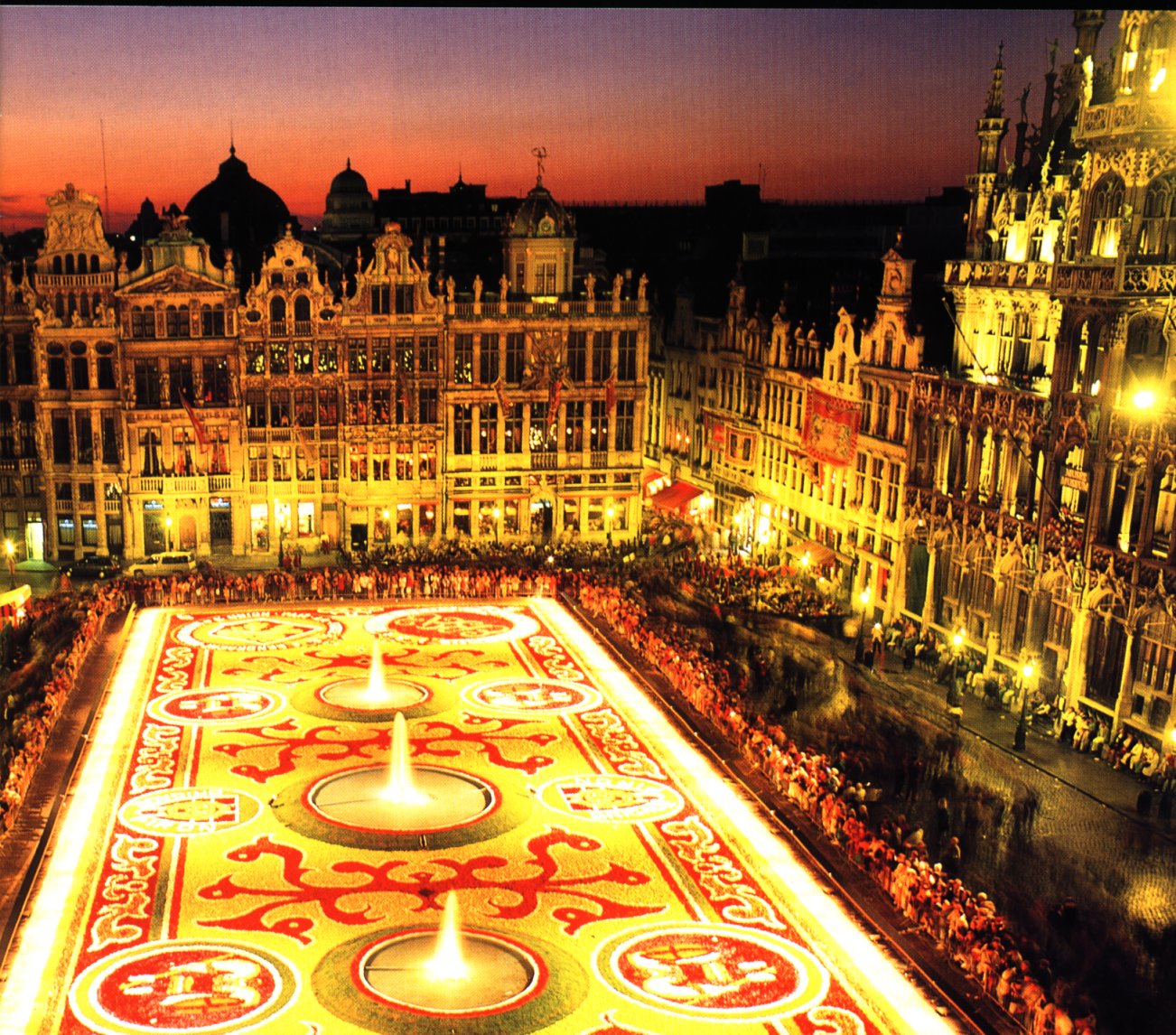
We went to “La GrandePlace”, a really nice square in the centre of the city. Close to that square is the famous “Manneken Pis” a small statue of a child pissing. The legend says that time ago, in Brussels started a fire, and the child extinguished it saving the whole city from the fire.
Then we went to Bruges, a really old and nice city. It looks like a fairy tale village.
We took a boat trip all around the city, and for me it’s a lovely place.
The next day we went to Antwerp. In the centre of the city there’s a statue of a man holding a giant’s hand. It’s because it’s said that there was a giant who cut up the hands of the visitors who didn’t pay him to get in Antwerp, until one day a man decided to finish him and cut up the giant’s hand. Antwerp in Flemish means “throw hand”.

The last city we visited was Ghent, the one I loved the most.
It has a river that crosses the city. By night, the houses are illuminated with lights, there aren’t streetlights, and it makes it even nicer.

For me this one’s been one of the best travels I’ve done, because in 8 days I’ve seen a lot of new places and practice other languages.

Also, travelling with the whole family is an amazing experience, I wish I could travel like this every year!

Bibliography: wikipedia
                        visit Antwerp
                        visit Ghent
                        google images