Monday, 2 December 2013

Mobile phones: A great invention?

Almost everybody has a mobile phone. But is it a great invention? I think there are both advantages and disadvantages.
It’s true that you can be in contact with everyone whenever you want, and you’ve got all you need in your pocket, but, on the other hand being in contact with the people far away from you may mean lose the contact with the people close to you.
It seems that nowadays everyone is isolated from the real world and answering WhatsApp’s always comes first. Is it good for us?
Also, a lot of teenagers are developing “nomophobia” (no-mobile phone-phobia); fear of being out of mobile phone contact.
But don’t forget the advantages of a mobile. Is like having a small computer. It’s light and comfortable and you can take it with you wherever.
So, what’s the solution? Having or not having one?
I think that the better solution in know when to use your mobile and when to be with the people around you.

Could you?

Monday, 16 September 2013

Moon Tiger.

The book I've read this summer is Moon Tiger, by Penelope Lively.
It was written on 1987, and that same year won the Booker Prize.

It begins as the story of an old English woman and a professional historian, Claudia Hampton, who's terminally ill, and decides to write a history of the world with her life.
Her first memory is when her father died in the war, when she was 10 years old and her brother Gordon 11.
When being a child, Claudia hates Gordon, but as they grow up they become true friends.
Claudia studies and becomes a war correspondent, and talks to a correspondent's post in Cairo, where she meets Tom Southern, a capitain of an English armoured tank division, and they fall in love with each other.
Claudia and Tom wanted to spend the rest of their lives together, but Tom died in the war a short time after they fall in love.
Shortly after Tom's death, Claudia finds out she's pregnant, and decides to rise it alone, but, unfortunately, Claudia miscarries.
When the war ends, Claudia is reunited with her brother Gordon, who got marry with a woman called Sylvia. Meanwhile she meets Jasper, and they start a relationship.
In 1948 Claudia finds herself pregnant again, this time her daughter Lisa is born. Claudia loves her, but she knows she has no patience and time enough to take care of a child, so Lisa ends up being raised by her grandmothers.

When Claudia turns 70, she receives the diary of Tom, sent by Jennifer, his sister, but Claudia has not courage enough to read it, and so sets the book aside.
Time after, Claudia's diagnosed with cancer, and she decides to apologize Lisa for have been a cold and distant mother, and reads Tom's diary.
The next day, Claudia passes out.

About the author... 
Penelope Low was born in Egypt in 1933, but at the age of 12 she was sent to a boarding school in England. She married the academic Jack Lively in 1957. When he died, she started living in north London.
She writes for children and adults, and by now she has won two prizes: the Booker Prize (Moon Tiger) and the Carnegie Medal (The Ghost of Thomas Kempe).

Personal opinion
I think this book was a little difficult for me to read, because she used a lot of English words I couldn't understand, but anyway  I found it interesting.

It's funny how Claudia tells serious situations and I love the way she expresses her feelings about people.

Thursday, 12 September 2013

Belgium.

The days 18 to 26 august my family and I went to Belgium.
Belgium is in the middle of Europe. It has three official languages: German, French and Flemish.
We visited 4 cities; Brussels, Bruges, Antwerp and Ghent.
We stayed one or two days in each city, and slept in a hotel per city.
The first day we visited Brussels.
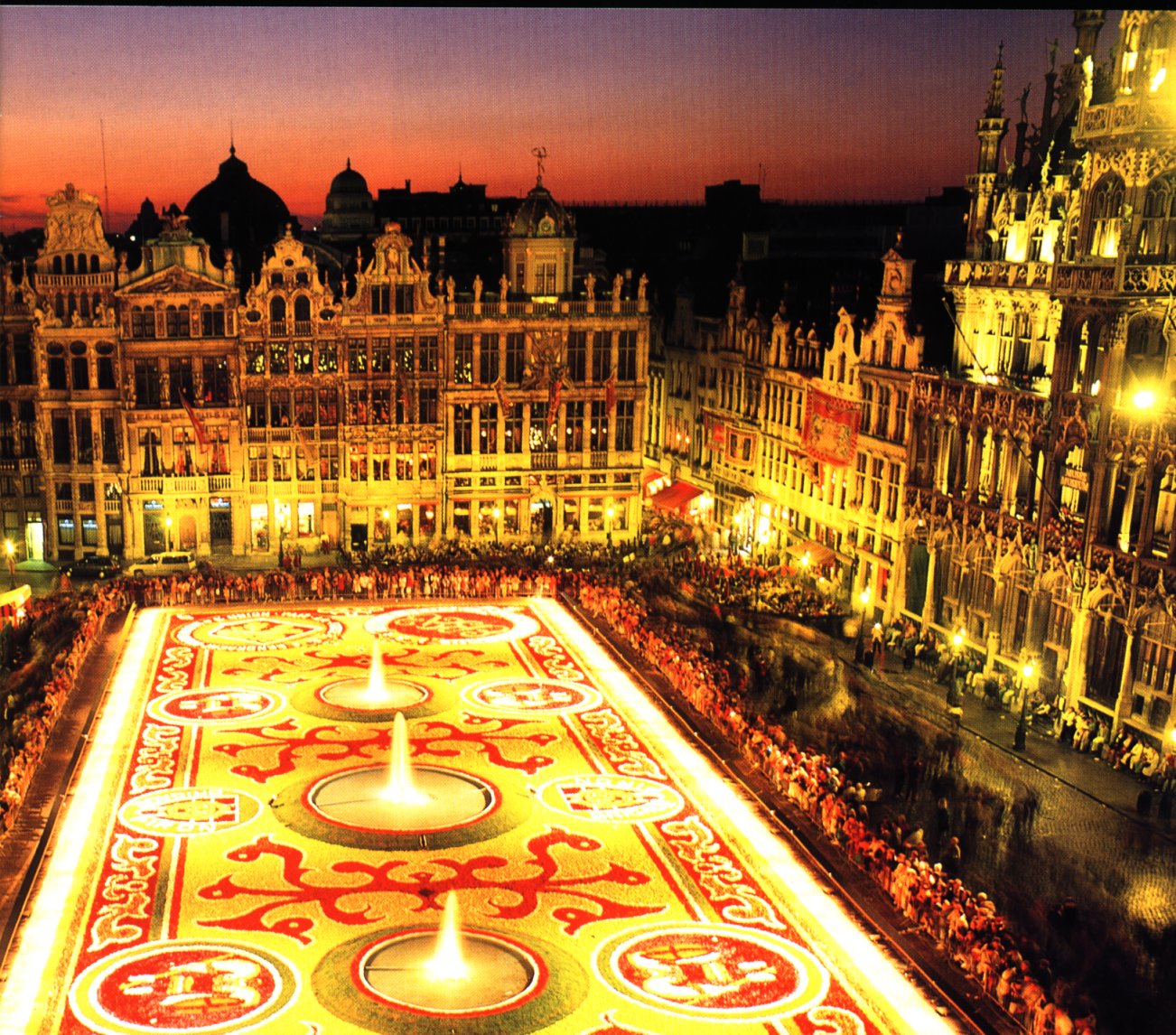
We went to “La GrandePlace”, a really nice square in the centre of the city. Close to that square is the famous “Manneken Pis” a small statue of a child pissing. The legend says that time ago, in Brussels started a fire, and the child extinguished it saving the whole city from the fire.
Then we went to Bruges, a really old and nice city. It looks like a fairy tale village.
We took a boat trip all around the city, and for me it’s a lovely place.
The next day we went to Antwerp. In the centre of the city there’s a statue of a man holding a giant’s hand. It’s because it’s said that there was a giant who cut up the hands of the visitors who didn’t pay him to get in Antwerp, until one day a man decided to finish him and cut up the giant’s hand. Antwerp in Flemish means “throw hand”.

The last city we visited was Ghent, the one I loved the most.
It has a river that crosses the city. By night, the houses are illuminated with lights, there aren’t streetlights, and it makes it even nicer.

For me this one’s been one of the best travels I’ve done, because in 8 days I’ve seen a lot of new places and practice other languages.

Also, travelling with the whole family is an amazing experience, I wish I could travel like this every year!

Bibliography: wikipedia
                        visit Antwerp
                        visit Ghent
                        google images

Tuesday, 13 August 2013

Campillo de Altobuey.

In August, some friends and I went to Ana’s village, Campillo de Altobuey, in Cuenca.
We stayed there from 3 to 7 and went and came back by bus, it took us 2 hours each travel!
Campillo de Altobuey has almost 2000 people living there; it’s a big village and has a pool, pubs, etc, so it wasn’t boring staying there.
The landscape is really nice!

We had the whole house for us, so we had to wash the dishes, clean our own cloths, etc, but it was worth!
By day we went to the pool, ride bikes or simply stayed sleeping until late, it’s summer!
And we did a party every night, that was our favourite part of the day, obviously.
The neighbours were usually old people, but they were very kind with us.

One of the things I love the most is travelling with friends, and this was a little like travelling with some of my favourite friends, so I loved that 4 days in Campillo.
Bibliography:
                      Ayuntamiento de Campillo de Altobuey

Feslloch 2013.

Feslloch is a festival of Valencian music celebrated in my village, Benlloch.
The word “Feslloch” is a pun in Valencian, and it means make space.
This year was the 7th edition, and came famous groups like Obrint Pas or Al Tall.

From 11 to 13 July acted 25 groups and singers.
They acted in a small stage, and the people who went to watch them slept in a pinnate close to it with tents.

By day there were a lot of activities, like workshops, trivial,
 karaoke... 
And by night the people came to the enclosure showing 
a bracelet like this -->
Once you’ve showed it, you can pass whenever you want.
Inside the enclosure they sell drinks, cloths and there was the stage.

But there isn’t only music; also came a famous comic called Xavi Castillo.
For me it’s an especial festival, because I like a lot this kind of music, and some of my friends go there too.
This one has been the second time I've gone and it's been amazing!


I hope I go to the rest of the editions of this festival, because it’s very emotive, and if you want, you can come too! See you in Feslloch ’14!
Bibliography:
                      feslloch.com
                      Feslloch 2013 Fotos
                      obrintpas.com
                      altall.cat
                      potdeplom.com


Tuesday, 5 February 2013

"In Time" or "On Time"?

·ON TIME: means to arrive at the appointed time.
If you meet at 4'00 and you arrive at 4'00, then you are on time.

·IN TIME: means to arrive with time to do something.
You're not exactly on time, but you're not late because there's still time.

He wasn't on time, but he was in time for the meeting, because it hadn't started yet.


Bibliography:  To Learn English
                          Eng vid

Sunday, 20 January 2013

Friday, 4 January 2013

Tales of Mystery and Imagination


The book I read this Christmas is Tales of Mystery and Imagination, by Edgar Allan Poe.
Allan Poe is a famous American writer. He was born in 1809 in Boston, and died in 1849. He was orphan so his childhood was sad.
He was a master of the short story (tales) and some people consider him the inventor of the crime fiction.
His most important works are: the Spectacles, Berenice, the Obong Box, etc.
A writter similar to Edgar Allan is Agatha Christie, that also writted crime stories.
This book contains five tales: William Wilson, the Gold Bug, the Fall of the House of Usher, the Red Death and the Cask of Amontillado, but I'm just going to talk about one.
Usher was a friend of mine since a long time ago, but I hadn't seem him for a very long time. Once then, I found that my friend had really changed; he was as white as milk, his eyes were really big and his lips dark and thin.He said he had a illness of his family that make your senses go sharp, and when you see, smell, taste, touch or hear something in a strong wat, you may go mad. We were talking in a room when his sister walked across it without realising we were in. "She cares nomore about she is dead or alive" he said, "you probably won't see her alive anymore".
One day Usher told me that his sister wasn't in our world anymore. I wanted to burry her, but he said he didn't want to burry her yet, just to be sure of his death. 3 days after her "death",her body opened the door and fell on the floor. My friend died from the shock, so I came home, and ever came back to that house.

Personal Opinion: I think it's a nice book, but it's a little bit macabre in my opinion. It is very interesting but scary. I like this writter because he was imaginative and creative, and so are his books. The tales I liked the most of this book are the Gold Bug and the Fall of the House of Usher.

Bibliography: Wikipedia
                         Google Images
                         Edgar Allan Poe Biography
                         Poe Museum
                         Agatha Christie's Official WebPage